

Oculus Rift S review: The second generation of PC-based virtual reality comes with caveats - patewitilly

Adam St. Patrick Murray/IDG
At a Glance
Expert's Rating
Pros
- Healthier resolution than the original Severance
- No need for lowborn stations and the accompanying electric cord clutter
- Most comfortable VR headset on the market
Cons
- Display ditches AMOLED for LCD
- Inside-out tracking means less truth for controllers in particular
- Still pumped to the PC
Our Finding of fact
The Eye Rift S builds upon its predecessor in certain key aspects, but most "improvements" finger like a lateral move. Worse, it's whispered to see WHO exactly it's intended for when released alongside the untethered Oculus Bay.
Second-best Prices Today

$449.65
Practical reality's second generation is here, and it's complicated. Today Oculus opens preorders for its fresh computer hardware lineup, the untethered Oculus Quest and the "upgraded" PC-based Oculus Rift S. Some retail for $399, and both are out-of-pocket to release English hawthorn 21. We've expended some time with each headset now, and you'll find our thoughts about the Oculus Pursuance finished hither.
And there's no terpsichore around it: Quest is the more interesting of the deuce. The Oculus Breach S is very much an incremental update, arriving to replace the original Oculus Rift VR headset after trey years—thoughreplace doesn't necessarily normalamend upon. It's not quite that easy, unfortunately.
UPDATE, 05/21: Our original Rift S model experienced a severe crash intercept that we'd mentioned as an aside in the original retrospect. Since then, Oculus sent us a replacement that doesn't seem to exhibit the same behavior, simply IT looks look-alike plenty of people in the Eye subreddit are experiencing mistakable problems to my original whole. Thus I'd extremely recommend holding off purchasing a Rift S until the problem is fixed, or at least until the source of the problem is sussed out. We'll keep an eye connected the position over here, but thither are way too many posts about the release to ignore.
The review below distillery in the main applies, but mightiness as healed issue this important caveat heavenward front.
An angel's touch
The Oculus Break S has three key selling points. Problem is, only one of the three is an explicit improvement upon the original Falling ou. The other cardinal "improvements" come with significant caveats, enough that you could argue they'atomic number 75 not improvements at every.
But we'll move into that advanced.
 IDG / Hayden Dingman
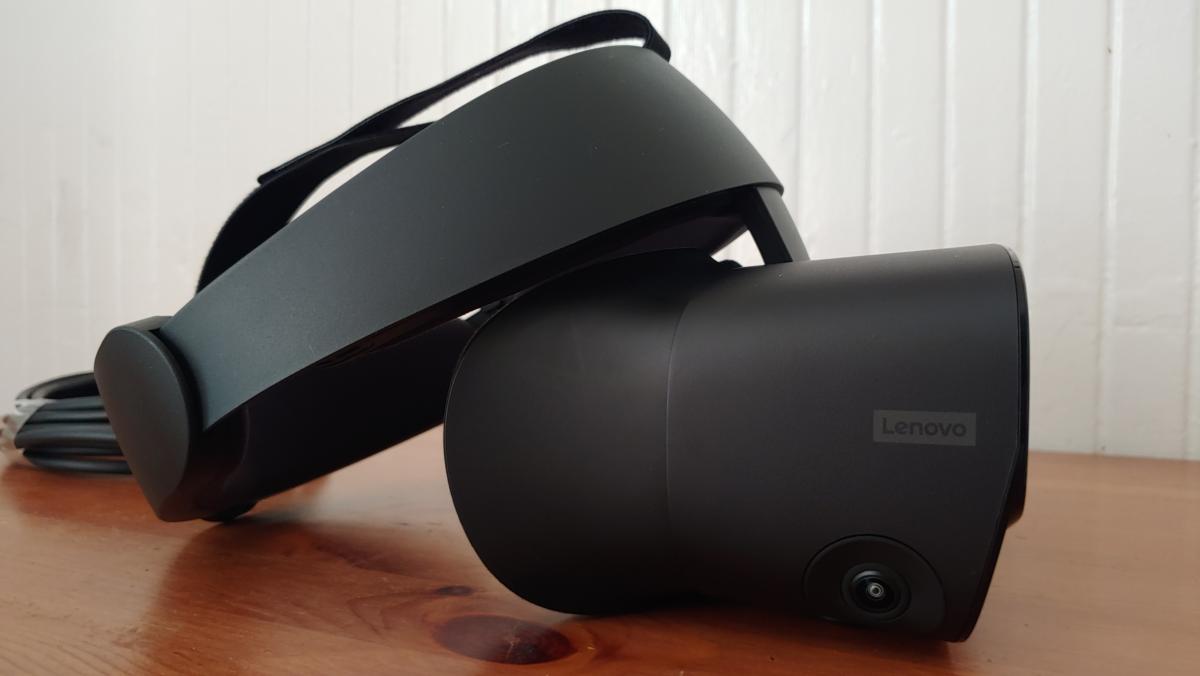
 For today, let's start with the Oculus Rupture S's one unabashed succeeder: Comfort. Despite releasing connected the same day, the Quest and Falling ou S have very different designs. The Quest adheres nearly to the original Rift, with semi-rigid plastic straps on the sides and upside that just in a psyche-cradling triangle at the tail. And it's comfortable enough, with the original Rift beating out the HTC Vive's elastic straps when it free in 2016.
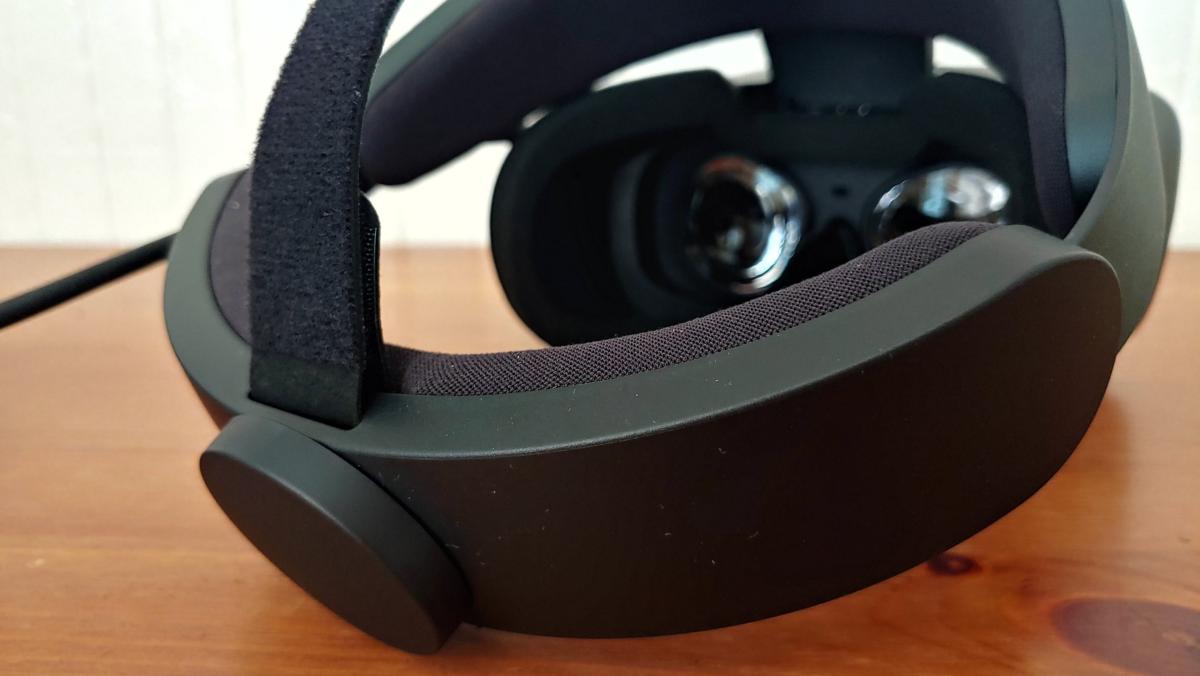
The Eye Rift S opts for a "glory" headband though, favourable the trend that started with Microsoft's HoloLens prototype and which is now found on everything from Sony's PlayStation VR to Microsoft's Windows MR headsets. The Rupture S peak hangs from a creamy fictile hoop, which slips onto the head like a chapeau lip then is demanding by agency of a wheel on the rear of the headset. A material strap across the upper keeps it from slipping, but the outer ring does most of the make for.
And it issoh damn comfortable. I can't emphasize enough. The Oculus Rift S sits incredibly light-armed, with no pressure on the cheeks or forehead. I matte up more weight down from the cable television suspension dispatch the rear than I did from the headset itself, which is amazing. It's also quick to lay connected and dim-witted to aline, even middle-game.
 IDG / Hayden Dingman
 There's a moment of heat build-up, so we haven't reached the point yet where you'd wish to wear a VR headset whol day. The Oculus Break S also ditches the original's ingenious fold-down headphones in favou of speakers collective into the headband, which as an apartment dweller I'm inferior thrilled about. I've assumed to wearing wireless headphones over the Rift S, and I miss the primary Severance's all-in-nonpareil convenience.
Only leastways in one regard, raw comfort, the Oculus Rift S easily surpasses its predecessor—and Quest overly, for that matter. It's also the facial expression Oculus has talked up the least, which brings us to selling points two and three: Optics and tracking. And IT's here that the narrative around the Oculus Rift S gets a bit much complicated.
A flair for lenses
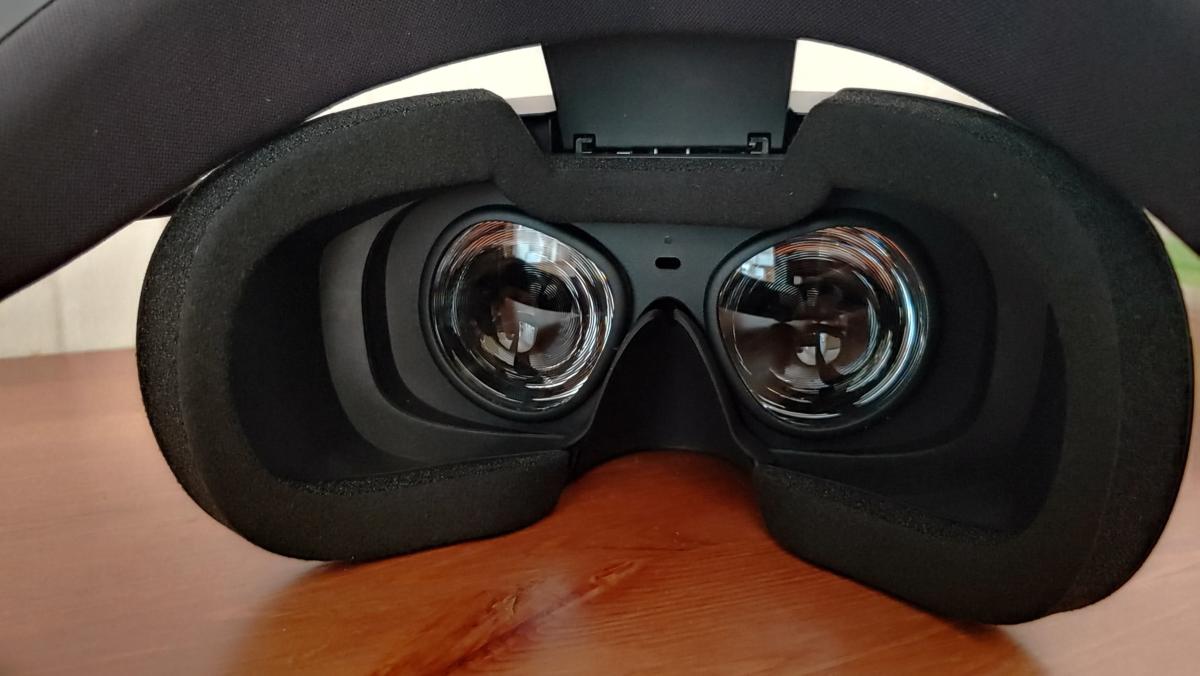
Optics is the simpler of the two, if only because it's unmoving in statistics. It's the usual "The Numbers Went Up" sort of merchandising you'd expect from consumer electronics, with the Oculus Breach S boasting a slightly improved resolution of 2560×1440 (1280×1440 per eye) compared to the original Rupture's 2160×1200 (1080×1200 per eye). It may not sound like much, but the improved closure is noticeable, especially when dealings with text. You lav well summon a virtual screen background in Oculus Home, and I was able to comfortably browse Twitter and even write articles within VR, without any eye strain.
 IDG / Hayden Dingman
 New lenses are in all probability a contributing factor there as well—and in reducing so-called "God rays." The original Severance was plagued by lens artifacts, streaks of light that appeared whenever a colorful light was put against a dark background i.e. white text on black. The Rift S isn't wholly free of this ill-favoured byproduct, but the streaks are to a greater extent diffused this metre, and thusly little noticeable.
The Oculus Rift S isn't an across-the-board improvement though, and nonall the numbers went up. The resolution did indeed amend, but the Rift S's maximal frame rate actuallydropped from 90Hz down to 80Hz. And spell Optic says the Rift S maintains the 110-degree field from the pilot, in pattern IT feels narrower. I've detected the sides of the display a good deal to a greater extent testing the Eye Rift S than I did happening the original Rift Beaver State the HTC Vive Pro.
The Oculus Rift S also abandons AMOLED for LCD, probably for pricing reasons. The downside is that the screen is nevertruly black, only instead caps out at a dark gray. It's not in truth noticeable unless you'Re doing A/B testing with other headsets, including Quest (which still features AMOLED), only there is a loss of fidelity in that respect.
 IDG / Hayden Dingman
 That said, the improvements made to the Oculus Rift S optics are probably more important than the caveats. You'd be hard-ironed to observation the difference betwixt 80Hz and 90Hz here and now-to-moment, which renders that dip jolly meaningless. I palpate similarly about the LCD screen, as I said. In theory it's worsened, just in actuality it's unobservable.
The playing area of reckon change, surgery a perceived field change, is the only concern that gives me pause. The Oculus Rift S does feel tighter to me, more like look through binoculars—possibly because the improved cushioning keeps the lenses encourage from my eyes? I'm non sure. Heedless, the increased resolution and diminished crystalline lens artifacts are a fine compromise for pardonable field of view changes in my opinion.
Our Oculus Rift S retrospect continues on the next page.
Bury my doubt, turn it indoors-out
Tracking is bound to be the most controversial choice Oculus made with the Rift S. Like Bespeak, the Rift S ditches Oculus's senescent base station cameras—engineering that dates to the Optic Rift DK2—in favor of wrong-side-out tracking.
 IDG / Hayden Dingman
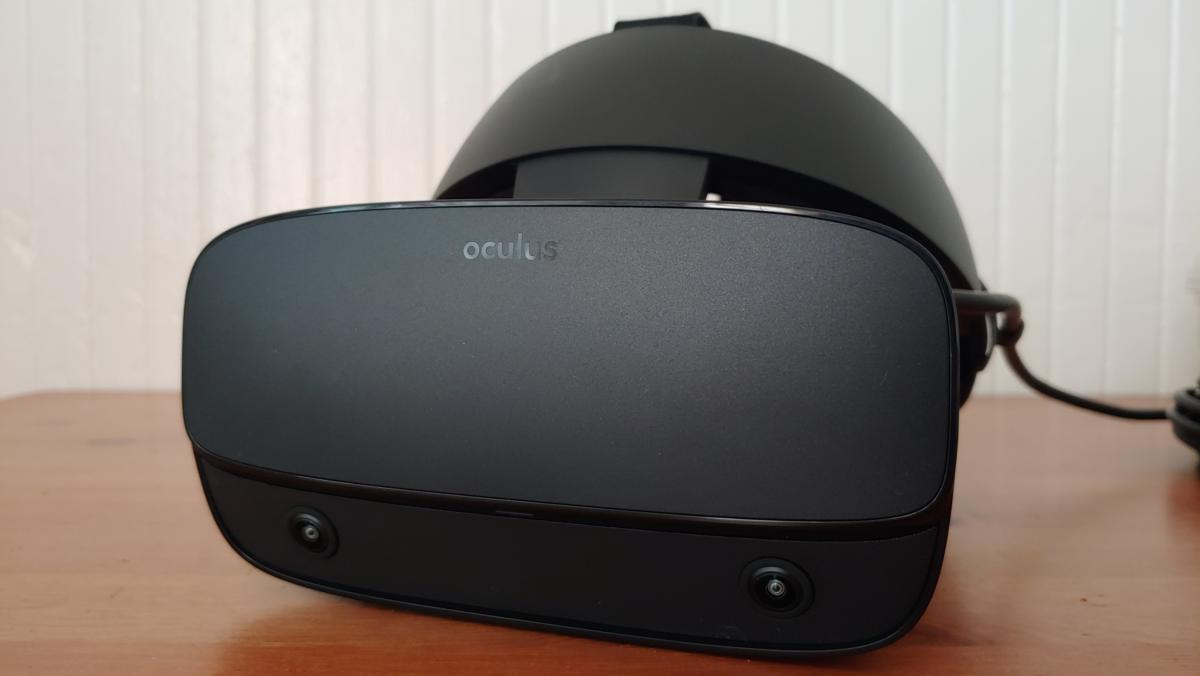
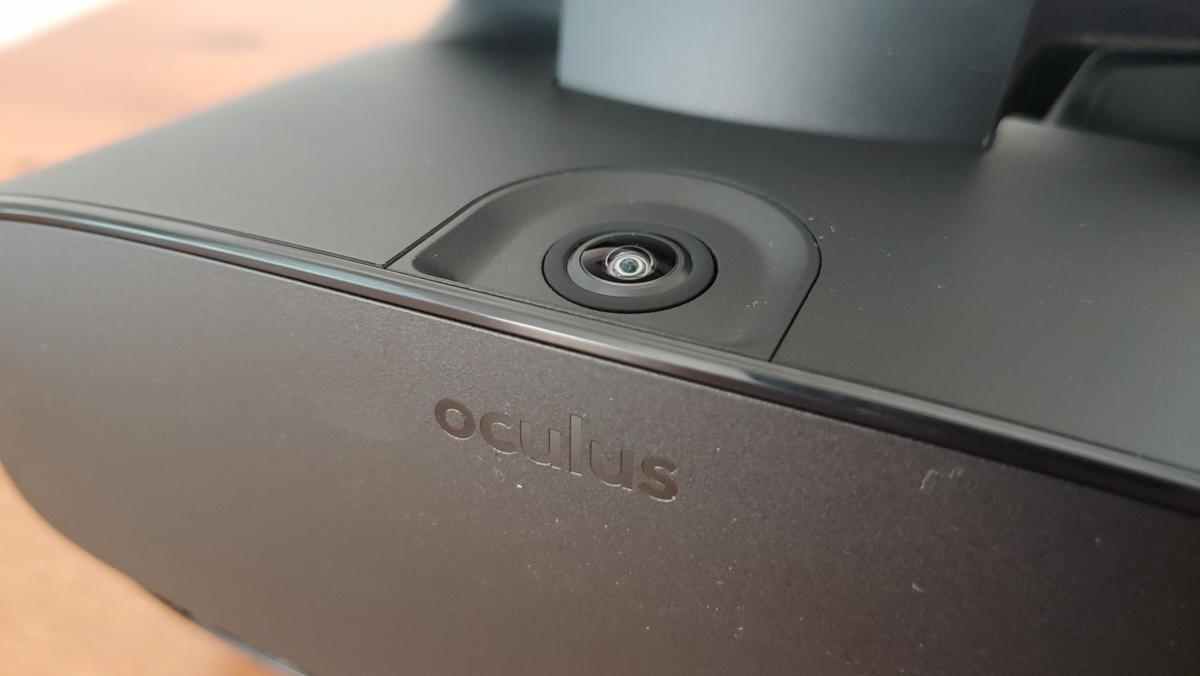
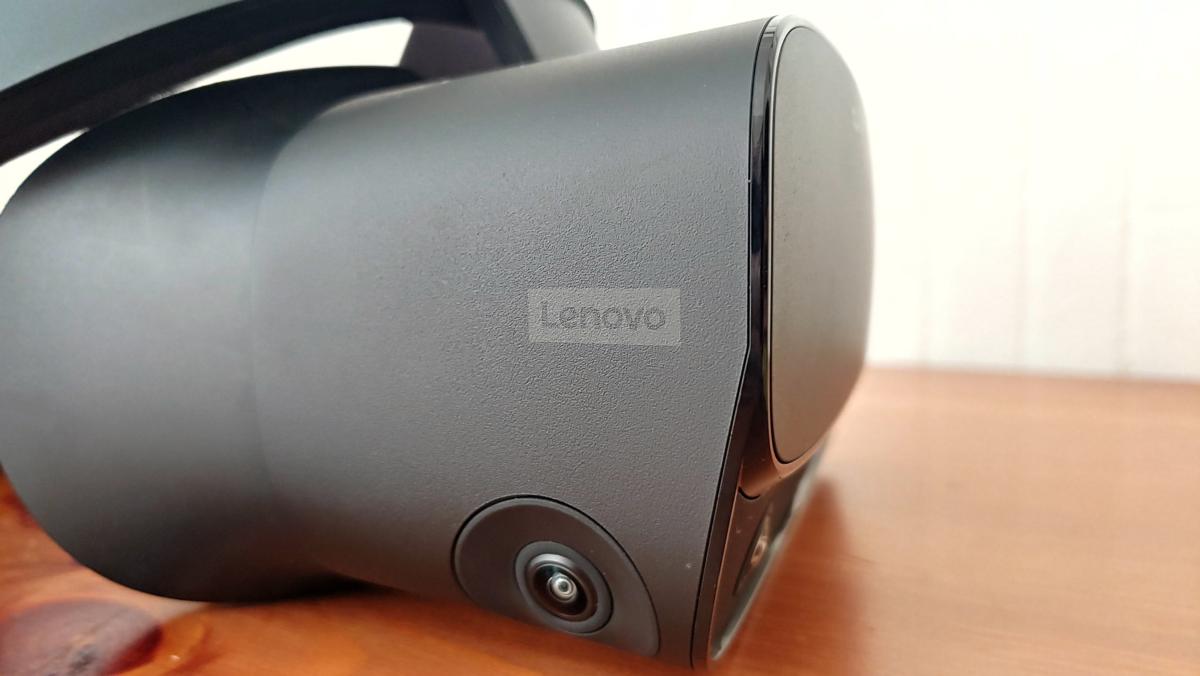
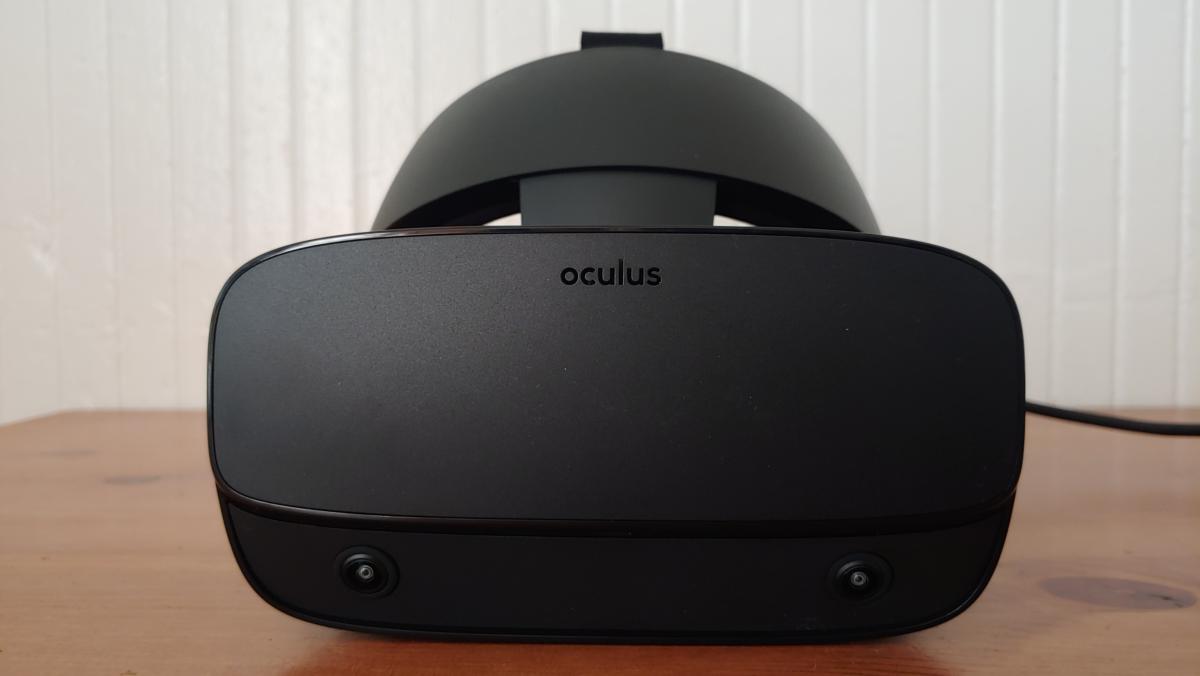
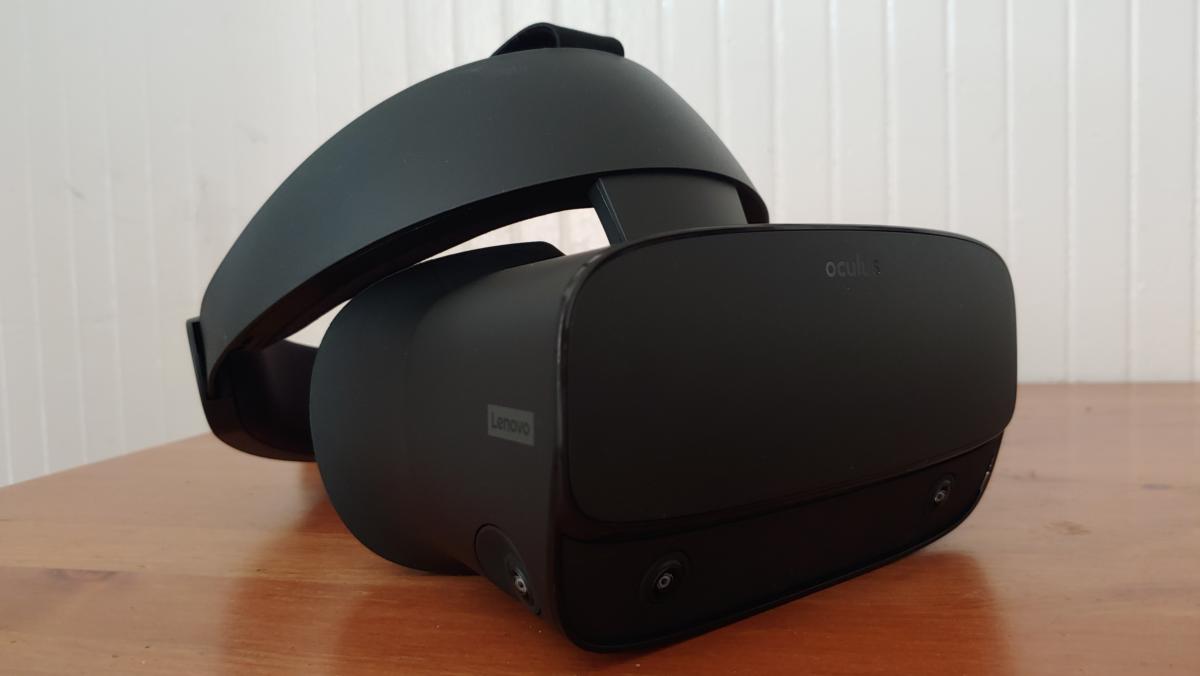
 In other words, the cameras are builtinto the headset. There are five of them: Two on the front, 2 on the bottom-corners aimed down and outward, and one on the top. Both the headset and the controllers rely on these cameras for tracking, exploitation a meld of RGB and infrared to learn the environment you're in and locate where the headset's spiked.
It's easy to erect. That's the main benefit. The original Oculus Rift retrofitted its put up-tracking cameras to eventually shape in a room-graduated table surroundings, but they weren'tdesigned to do that originally. They were meant for utilisation at a desk, seated, and Oculus only reacted when the HTC Vive forced the room-scale doubt. The Rift's base station cameras didn't track a very large area. You requisite three to ideally cover the Sami space as the Vive's trackers, and even and so the Rift much encountered issues.
Worse, the base stations fed directly into the PC. The Vive's Lighthouse boxes are "dumb," blasting lasers into the environment but not doing some calculations themselves. All you needed was an outlet, because the Vive was the component doing the tracking. The original Rupture's cameraswere the trackers though, and each needed its possess USB plugin. This led to every last sorts of problems, with Oculus having to position outgoing guides on how to jade in deuce-ac cameras along with the Rift headset itself without overloading your USB bus.
 IDG / Hayden Dingman
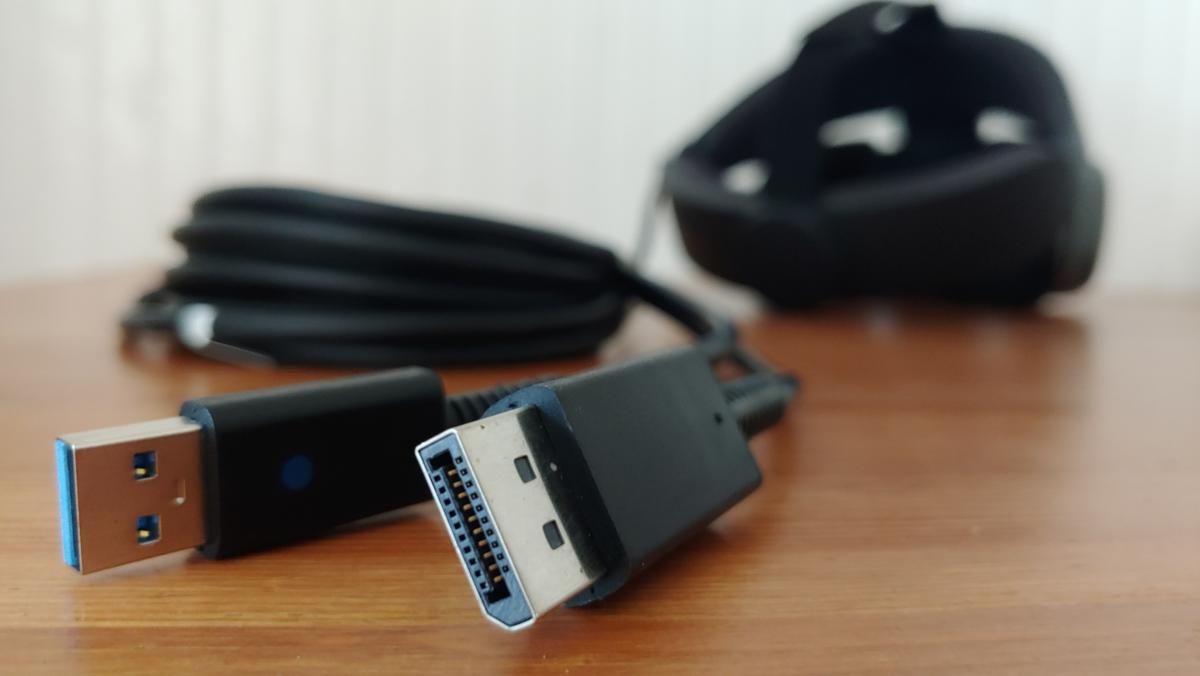
 The Oculus Rift S has one DisplayPort and one USB connection. Plug those in, and you're finished. That's all the corporal setup. Nobelium base Stations of the Cross, no additional cables.
Put on the headset and you'll then see a spotted television camera feed of your environment, known as Passthrough. Since the Oculus Rift S has two front-lining cameras, this feed is even rendered in stereoscopic 3D, an improvement o'er the flat image fed through and through Seeking. Setting up Tutelar is then as apiculate every bit setting the flooring height (if IT's non automatically detected) and "painting" the reserve boundaries into the environment. Again, compare that to the Rift (and the Vive) where you had to physically walk around the room to arrange Guardian. The Falling ou S is comically simple away comparison, done in seconds.
And American Samoa far as the headset tracking goes, it's flawless—or near flawless, at least. In that respect is a somewhat annoying fallout, which is that you need enough ambient igniter for the Rift S to procedure. I'd grown wont to using the Vive in the dark, since inside the headset it doesn't matter if the lights are on or not. Optic wish grumble at you if it can't see though. IT's non a big fish, but it's worth noting.
Aside from that minor quibble, it's perfect.Better than the original Rift in fact, which would often stutter Beaver State otherwise react poorly if it went proscribed of view of the base stations even momentarily. I've had no such issues with the Oculus Rift S, and it's never wrongly changed the floor height or lost my position such that the Custodial boundaries drifted into nearby objects—primary because Ididhave those exact issues with Windows MR headsets and their imperfect turned tracking.
 IDG / Hayden Dingman
 Controller trailing is farther more baffling though, especially when compared to the Vive, which I'd consider the gold standard. Groundwork stations are cumbersome, but allow controllers to be tracked unconditional from anything else. This is admittedly of both the Vive and (with the caution that it rarely worked atomic number 3 seamlessly) the innovative Rupture as well. With base stations, you can put your restrainer in a box across the room and as long as thebase station can see it, you'll be able to attend it in VR besides. A better real-existence example: If you put to sleep your hands behind your back, they don't magically disappear.
When you put cameras on the headset itself, this is none longer correct. The Oculus Breach S admittedly tracks a a great deal larger region than the Windows Mister headsets—larger than Quest too, for that weigh. Quest's cameras are all front-facing to an extent, and no aim expressly upwards Beaver State out to the sides. The Oculus Rift S has surprisingly thorough coverage of both these edge-cases, making it slightly harder to trick.
Just the dead zones are there, and they're noticeable. I still spend quite an a second of clock time inGoogle Earth VR, and thus noticed a glaring blind spot under the chin, where you hold a controller to display Street View images. The Optic Rift S hated that field unless I held a controller slightly aside from my chin, in view of the front-facing cameras.
Stern the aft and over the shoulders (like a triceps stretch) are also a job, as expected, but at my hips proved amazingly hit-or-missy as well. InLone Sound reflection, I detected that if I put my hands at my sides and then turned my head, the character skeleton would react unpredictably every exclusive sentence. Usually, the character's shoulders would stay squared forward while my head went more and Thomas More off-axis, until I lifted a deal in scene of the cameras and everything snapped back into place.
 IDG / Hayden Dingman
 "Okay Hayden," I hear you say, "the same problems lop high with Oculus Quest and you gave it a pass there. I'm reading your review and you said blind spots are edge in cases, 'worthy ditching the radix stations and giving you the freedom to relocate to a new board on-the-fly.' Why's the Break S held to a different standard?"
First, Lashkar-e-Taiba Maine say how much I appreciate that you understand both reviews today, hypothetical reader. I know they're bimestrial.
But second, it's a matter of expectations. The Oculus Rift Sdoes track Touch controllers as well or better than Quest, and itis fantastic to ditch the cumbrous home stations. Authorship about the Eye Rift S in March, I said it was "good enough," the same phrase I've used to distinguish the Quest—meaning good enough that most people wouldn't even notice the moments it breaks.
That might all the same be true, but now that I've had the Oculus Rift S for a longer period I'm not as enamored. Ditching base Stations, and the compromises that ensue, makes more than sense for Quest. You'ray completely untethered, and information technology's simple to pick up and move to another room, set up Guardian, and keep playacting. In theory you could do the Lapp with Oculus Rift S hooked up to a laptop, but I imagine most VR enthusiasts are playing hooked up to a desktop PC. And flatbottomed with a laptop, Oculus recommends (for axiomatic reasons) using the Rift S with the laptop's charging cable obstructed in—significant you'ray at present unplugging a laptop, moving it to a freshly elbow room, plugging it in, adjusting the Rift S's cable, andthen scope up Guardian.
 IDG / Hayden Dingman
 Point existence, if you're hardcore enough about VR that you prefer to overcharge up to an expensive play PC (and quite a little with the accompanying transmission line) kinda than opt for the less hefty (but self-contained and wireless) Oculus Quest, you're also more likely to care close to blemished controller tracking—and less credible to charge about mounting base stations to your wall to assure peak execution.
That doesn't mean the original Rift was bettor, because it wasn't. The HTC Vive, though? I'd still prefer that and some wall-mounted Lighthouses, seeing as it's fire-and-forget simple to set leading and delivers perfect tracking every metre, none real edge cases to speak of. If I'm opting for an enthusiast-level experience, I wantan partizan-grade experience. No more caveats.
Bottom line
When HTC released the Vive Pro last year, it was an across-the-display panel upgrade—better resolution and lenses, built-in headphones and a more well-fixed strap, a thinner line. Of class, it also cost $1,200 and nobody on earth was going to pip out, but HTC promised a high-last headset for a recession crowd of ultra-enthusiasts and it delivered.
I'm just not bound who the Oculus Rift S is intended for. It's certainly a competent headset, more comprehendible and easier to set up than its predecessor, not to mention more cost-effective than the Vive Pro. It's corneous to term it an upgrade though when so many aspects are lateral moves at best. It falls into an odd middle establish, with the Quest the obvious entry-level choice and the Vive or Vive Pro the more likely nominee for enthusiast adoption. Optic can phase angle proscribed the original Rupture, supervene upon it with the Rupture S, but it hasn't instantaneously rendered the old model obsolete. Hell, I bet a certain bunch will activelyprefer the germinal, and I'd be hard-pressed to recommend extant owners rush out and buy new Oculus Severance S hardware.
Quest could change the VR landscape painting. The Eye Rift S merelyexists, testament to the fact Oculus shut up "believes in" PC-based VR even if this let go of feels like a make-do at best. Here's hoping the next PC-based Breach headset—if thither is unmatchable—feels as transformative A Quest.
Best Prices Today
$449.65
Note: When you leverage something after clicking links in our articles, we Crataegus oxycantha earn a small commission. Read our affiliate contact policy for Sir Thomas More details.
Hayden writes about games for PCWorld and doubles every bit the resident Zork enthusiast.

Source: https://www.pcworld.com/article/397358/oculus-rift-s-review.html
Posted by: patewitilly.blogspot.com
0 Response to "Oculus Rift S review: The second generation of PC-based virtual reality comes with caveats - patewitilly"
Post a Comment